















How often should you review your portfolio?
There's a lot to love about long-term investing. You can set up automatic contributions, choose a portfolio that fits your goals, and let time do the heavy lifting.
But "long term" doesn't mean "check back in 30 years."
Life changes. Markets fluctuate. And over time, the portfolio that once fit your goals may drift in a different direction. That's why even the most disciplined investment strategy requires periodic check-ins.
Why should you review your investment portfolio?
Think of your portfolio like a tree in your garden. It doesn’t need daily attention, but it does benefit from the occasional tending to keep it healthy.
The same goes for your investment portfolio. Here are a few reasons why.
Your portfolio may no longer reflect your intended strategy
Your portfolio isn't frozen in time. Different investments rise (and fall) at different rates. Over time, your strongest performers can make up a larger share of your portfolio than you originally intended.
That might not sound like a big deal, but it can alter the amount of risk you're willing to take on. For example, a portfolio that started as a balanced mix — say, 60% equities (such as stocks) and 40% fixed income (including bonds) — could gradually become much more equity-heavy over time, leaving you exposed to bigger market swings than you originally planned for.
👉 Did you know? Tangerine's portfolios are rebalanced every quarter to help keep your investments aligned with their target mix. However, if your savings are spread across different portfolios or institutions, your overall investment mix may drift away from your target over time. Talking to an advisor can help ensure your overall investment mix is aligned with your objectives.
The chart below illustrates how a balanced portfolio can change over time. With quarterly rebalancing, the portfolio stays close to its original 60% equity and 40% fixed income mix. Without rebalancing, market movements can cause the portfolio to become much more conservative or much more aggressive over time.
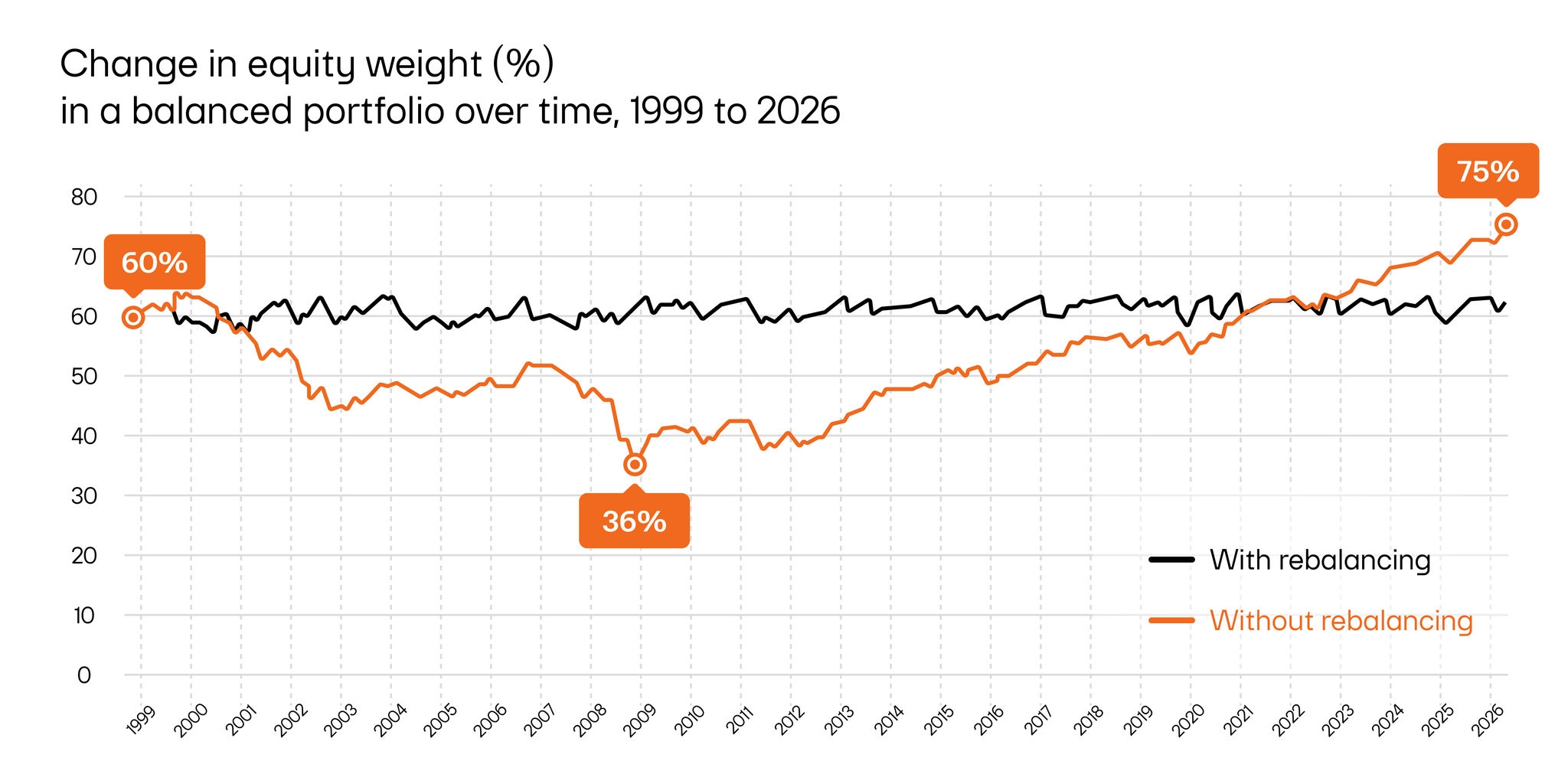
For illustrative purposes only. This chart shows the hypothetical change in the equity allocation of a portfolio initially invested 60% in the MSCI All Country World Index NR and 40% in the FTSE Canada Universe Bond Index, in Canadian dollars, from January 1, 1999 to June 30, 2026. The rebalanced illustration assumes the portfolio is rebalanced when the equity allocation varies from the target allocation by 3% or more. Indexes are unmanaged and cannot be invested in directly. The illustration does not represent the performance of a Tangerine Portfolio.
Your financial goals can change over time
Even if your portfolio hasn't changed much, your life probably has. Perhaps you're saving for a first home or welcoming a newborn, or you’ve got a new job or salary, or received an inheritance. A portfolio that worked five years ago may not match your reality today.
That's why a portfolio review isn't just about investment performance. It's also an opportunity to make sure your investments still align with your goals.
What does a portfolio review include?
Checking in on your portfolio isn't about digging everything up by the roots and starting over. It's more like checking on your tree, pruning as necessary, and making sure it’s still growing the way you expected.
Start with your financial goals
It’s important to revisit the reasons you're investing before reviewing your portfolio. Are you saving for retirement? Buying a home? Funding a child's education? Or has preserving your wealth become a bigger priority?
Then, think about your timeline. Will you need this money in 30 years, five years or sooner? Finally, ask yourself whether you're still comfortable with your portfolio’s level of risk.
These are the conversations Tangerine advisors help guide people through every day. They start with what matters most: your goals, your timeline and your comfort with risk.
“A good review starts with your goals,” says Aaron Ayers, a Certified Financial Planner® and Tangerine advisor. “Performance is only one part of the conversation.”
Don't focus on performance alone
It's tempting to log in and focus on how much your portfolio is up or down. But markets rise and fall. Volatility is a normal part of long-term investing.
Instead of asking, "How much money did I make?" a better question may be "are my investments still aligned with my goals?"
A portfolio review starts with purpose, not performance.
Read more: 12 mistakes that investors make
Review the things you can control
Once you've confirmed your plan still fits your goals, spend a few minutes reviewing the details. Does your asset allocation still match your target mix? Are you using and prioritizing the right accounts — such as a TFSA or RRSP1 (called an RSP at Tangerine) — to support your goals and make the most of the available tax advantages for your situation? Are the fees you're paying in line with what you expected?
“You don’t always need big changes. Sometimes it’s about confirming the fundamentals are still aligned,” Ayers says.
Sometimes a few small tweaks today can help keep your portfolio aligned with your goals down the road.
Did you know? Tangerine’s portfolio fees are about half those of Canada’s largest banks — helping keep more of your money invested for the long term*.
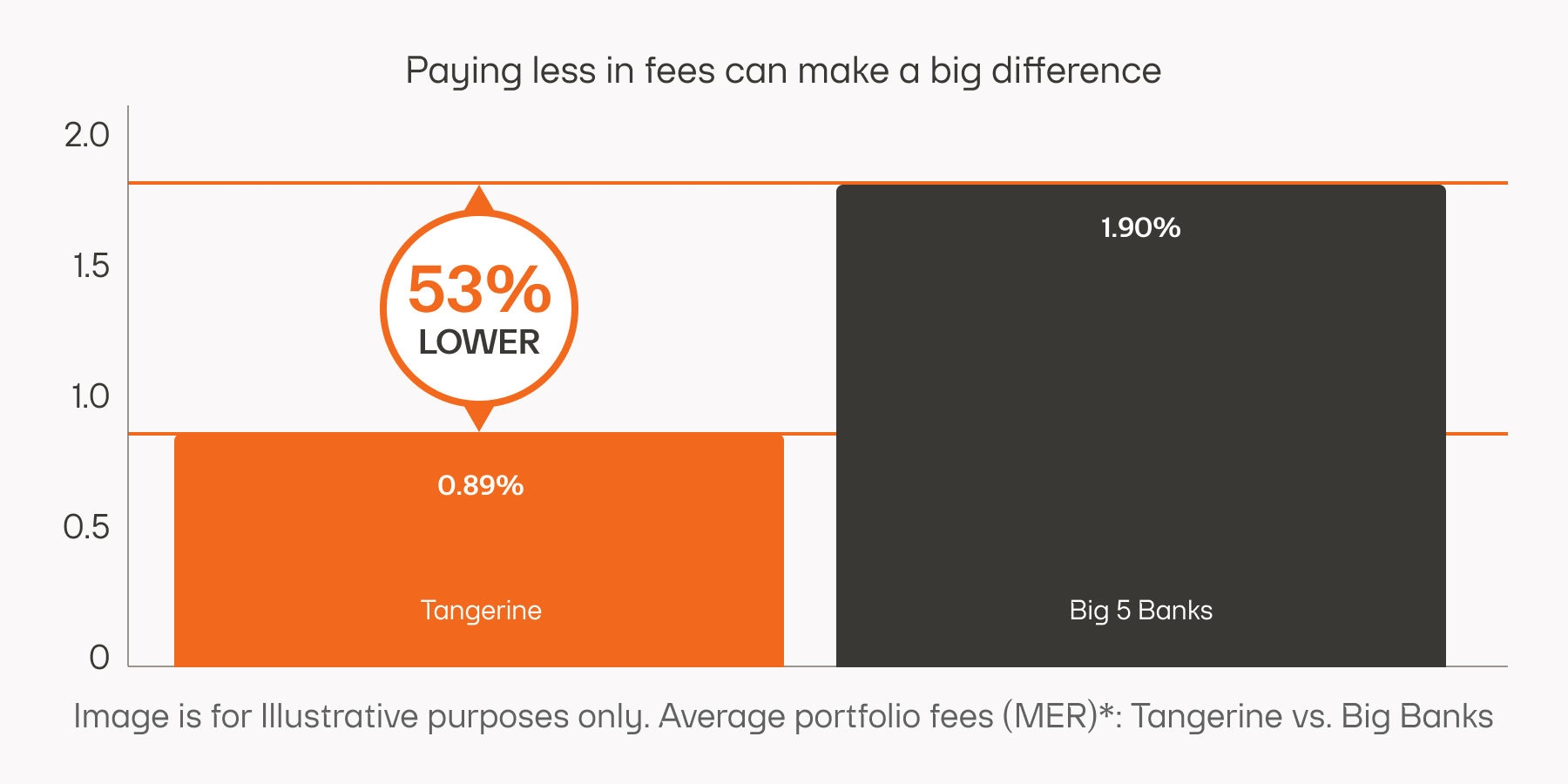
*Comparison based on the average MERs of portfolio solutions offered by BMO, CIBC, RBC, Scotiabank and TD, using publicly available information as of September 29, 2026. See footnote below for full methodology and comparison details2.
What are the signs it's time to review your portfolio?
You don't need to review your portfolio every month. But these situations below are good reminders to check in.
✅ Your financial goals or life situation has changed.
✅ Your investment mix has strayed from its target.
✅ You're feeling more or less comfortable with market volatility.
✅ It's been a year (or more) since you last reviewed your portfolio.
Sometimes the outcome is to confirm that things are still on track without making any major changes.
What is portfolio rebalancing?
Markets move. When they do, so does your portfolio. Think of rebalancing as a tune-up rather than a renovation.
Rebalancing means bringing your portfolio back to its intended investment mix — for example, 60% equities and 40% fixed income — after market movements cause it to drift away from that mix. Rebalancing may involve buying, selling or redirecting new contributions.
👉Did you know? Tangerine's Core Portfolios, Global ETF Portfolios and Socially Responsible Global Portfolios are reviewed and rebalanced quarterly, helping keep your investments aligned with their target asset mix.
How rebalancing helps prevent portfolio drift
Rebalancing helps prevent “portfolio drift” — when high-performing investments gradually come to make up a larger share of your portfolio than you planned.
Imagine you started with a balanced portfolio that was 60% equities and 40% fixed income. After several years of strong stock market returns, that mix could theoretically creep closer to 70% equities and 30% fixed income, exposing you to more risk than you originally intended.
For many people, reviewing your portfolio at least once a year or after a milestone event can help to confirm your overall investment strategy still fits.
How digital tools can help you monitor your investments
One of the biggest advantages of digital investing is that it makes it easier to view your investments. With just a few taps, you can see your account balance, contributions, performance and asset mix.
Tools like the new wealth features in the Tangerine app make it easier to stay connected to your investments. And when you understand what you own, it can help you make informed decisions and have more productive conversations with an advisor.
Combine digital tools with professional advice
Whether you're wondering if your investment mix still makes sense, your timeline or priorities have changed or you want a second opinion, a Tangerine advisor can help you put your portfolio into context. Digital tools and professional advice can complement each other.
A portfolio review doesn't necessarily mean making changes. Sometimes the review confirms that your current investment plan still fits your goals.
When to talk to an advisor
An advisor can help you determine whether your portfolio still reflects your goals, timeline and comfort with risk. Access to an advisor when you need one is built into the fees of all Tangerine Portfolios.
During your review, you can check that your automatic contributions are still on track, your asset mix hasn't shifted significantly, and your investments still match your goals.
👉Did you know? All mutual fund dealers, including Tangerine Wealth , are required by regulators to create an investor profile that includes your financial situation, investment objectives, time horizon, risk tolerance and knowledge of investing. By answering a series of questions, both you and the dealer can determine an investing plan best suited to your situation.

Get investment advice when you need it
Just say the word, and we'll have a Tangerine Advisor reach out at a time that works for you.
Review your portfolio after major life events
Major life events are often the best reason to revisit your investment plan. A new financial goal, a higher income, a home purchase, retirement or even a period of market uncertainty can all be good reasons to reconnect.
An advisor may also use planning tools to estimate the likelihood that you’ll reach your goals across thousands of possible market scenarios.
Questions to ask during a portfolio review
Before your meeting, review your accounts and come prepared with a few questions:
• Am I still on track to reach my long-term goals?
• Is this portfolio still appropriate for my age and stage?
• Am I comfortable with the level of risk?
• Are there any opportunities I'm missing, such as increasing my contributions or using a different account?
• Can I automate my contributions in any way?
A little preparation can make the conversation more productive.
Long-term investing works best when it stays personal
A key benefit of long-term investing is that you don't have to react to market noise. You can invest consistently, resist the urge to react to every market swing, and give your portfolio time to grow. But that's different from totally ignoring your portfolio.
As legendary investor Warren Buffett reportedly said, "Someone's sitting in the shade today because someone planted a tree a long time ago." Wise words. We'd only add one thing: now and then, it's worth checking that the tree is still growing the way you hoped.
A review once or twice a year isn't a chore. Instead, it's a chance to ask whether your portfolio still supports the future you're working toward.
Footnotes
1 Deposits to TFSA and RSP Accounts are subject to the limits imposed by the Canada Revenue Agency (CRA). You are fully responsible for monitoring your individual contribution limits and ensuring any and all deposits fall within these set CRA limits.
2 The comparison is based on portfolio solutions offered by BMO, CIBC, RBC, Scotiabank, and TD, identified from publicly available information September 29, 2026. MERs for Series A funds were used for each program, MERs for Series A funds were used for each program, except for TD, where the equivalent Investor Series was used. MER data is sourced from Morningstar Direct and reflects the most recent MER disclosed in each fund's MRFP. The average MER for each firm's portfolio solutions was calculated and then averaged across firms. While efforts were made to compare similar portfolio solutions, differences in product offerings, fund structures, and series classifications may affect comparability. Fee comparisons are based solely on the MERs of the portfolio solutions reviewed and do not reflect other factors that investors may consider when evaluating investment options.
Diversification does not guarantee a profit or eliminate the risk of loss.