

















Willful thinking: Erin Bury on turning ambition into action
When Erin Bury began dating her husband, Kevin Oulds, she was up front about what she wanted out of life.
“I’m ambitious, and I want a big career,” she remembers telling him. “I need you to be comfortable with that.”
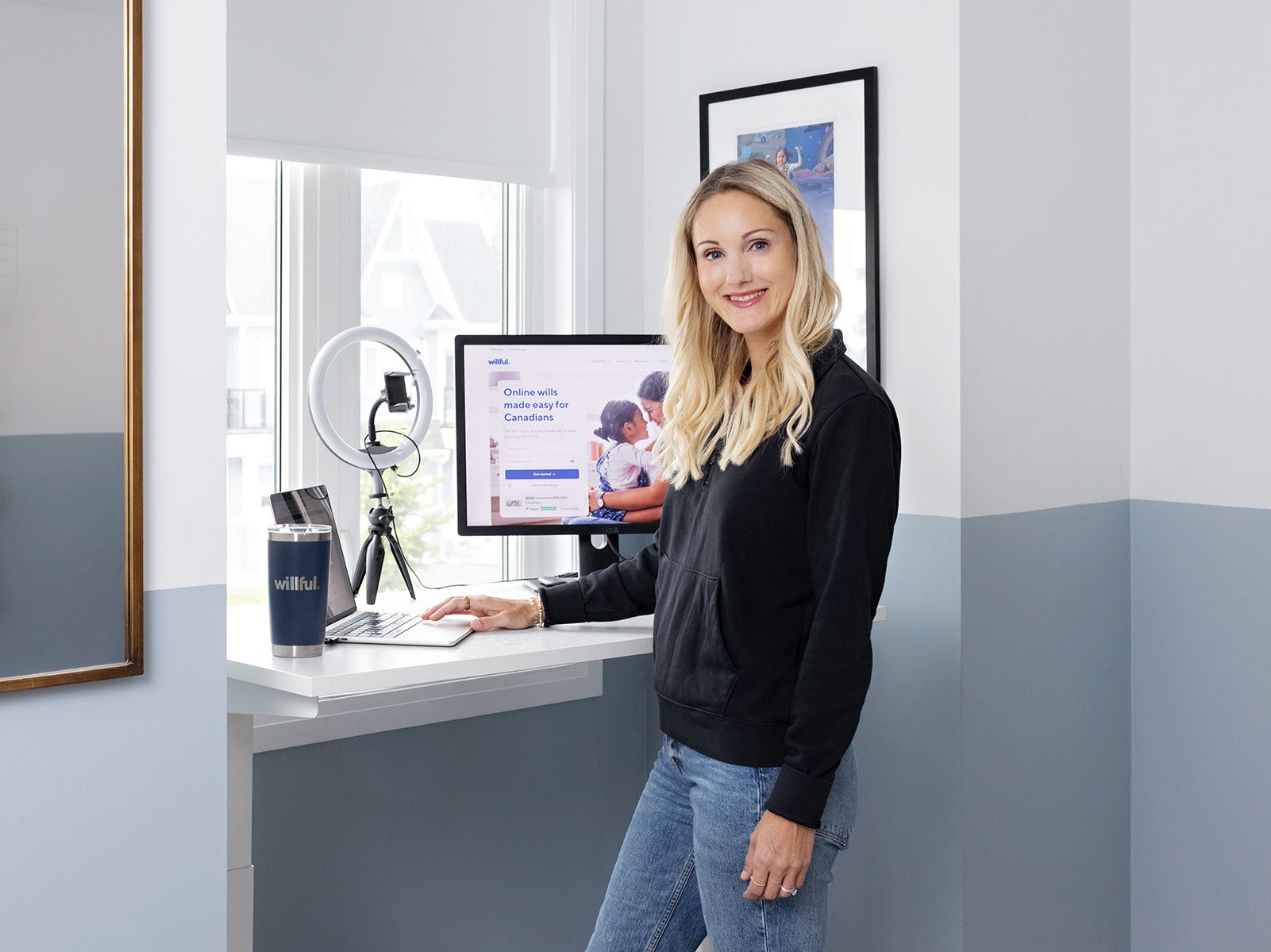
Together, Bury and Oulds now run Willful, a Canadian company specializing in online estate planning, including wills and powers of attorney. With a staff of 28 remote employees, they’ve served more than 100,000 Canadians since 2017.
The idea for Willful came after Oulds’ uncle died unexpectedly without sharing his wishes with his family, an experience that showed the couple how important end-of-life planning can be.
Before Bury officially joined Willful in 2019, she worked with the company through her role at Eighty Eight, a creative communications agency specializing in digital marketing, public relations and design. Bury and her team led the development of Willful’s brand, including the name, logo, initial website design and marketing.
Bury describes Oulds, co-founder and head of research and innovation, as the “ideas guy,” and herself as “a type A operator.”
“I never saw running a business on my life bingo card,” Bury says. Life had other plans.
Building a career and embracing new opportunities
Before joining Willful, Bury’s resume resembled her parents’ paths. Her dad worked the same journalism job for decades, and her mom built a successful career in tech, including at Nortel, and is now a PR consultant. After graduating with a degree in journalism from Carleton University, Bury held several impressive positions, including managing editor of BetaKit, a publication dedicated to Canadian tech, and managing director at Eighty Eight.
But in early 2019, Bury returned from her and Oulds’ honeymoon with new clarity.
“I had learned everything I could at the agency,” she says. “I told Kevin I wanted to build a brand from scratch … something with purpose.”
She remembers that Oulds, without hesitation, told her: “You know you’re describing joining Willful full-time, right?”
In that moment, her mom’s advice from years earlier rushed back. Bury had been recruited to work at a social network for entrepreneurs, which would mean leaving her first full-time job out of university at a PR agency. Her mom had given her the nudge she needed, saying, “What’s the worst that can happen?”
Bury asked herself the same question on that pivotal day in 2019. The answer was obvious, as was the title Bury wanted.
Taking on the role of CEO formalized her long-standing commitment to the business and reflected the responsibilities she had already begun to take on. As Willful prepared to scale, Oulds shifted his focus to business development and partnerships.
A founder in her own right
Willful wasn’t Bury’s first taste of entrepreneurship. Years before moving to Prince Edward County, where she, Oulds and their two daughters call home, Bury used to visit the area with girlfriends. After noticing that there were no bicycle tours in the area, they started a business together.
“It was a labour of love, and I proved to myself that I could be a founder,” she says.
Although she and her friends eventually sold the company to a local operator, the experience gave Bury the confidence to embrace her role as Willful’s co-founder and CEO.
Learning to embrace flexibility
Naturally, stepping into a big role comes with equally significant challenges. On the personal side, one of the hardest parts for Bury is “beating the nine-to-five out of myself” and embracing the flexibility that comes with running her own business. She feels guilty when she arrives at her desk at 9:30 a.m. after dropping her daughter off at school. But she and her colleagues, including Willful’s COO Julia Wilkie, keep each other accountable and remind one another that it’s OK, even necessary, for personal commitments to take priority at times.
If Oulds notices Bury stretching herself too hard or working late, he’s the first to ask why a task can’t wait until the next day. “While I still struggle with the guilt, I know that to be successful, I need to have an off switch,” Bury says.
Trusting her instincts
On the business side, Bury has had to learn to trust her instincts and “take feedback with a grain of salt.” For instance, when it comes to fundraising, which she says is the hardest part of her role, everyone has an opinion.
“It’s easy for others to be an armchair critic,” she says, “but you have to trust your gut that you know more about your customer and your industry.”
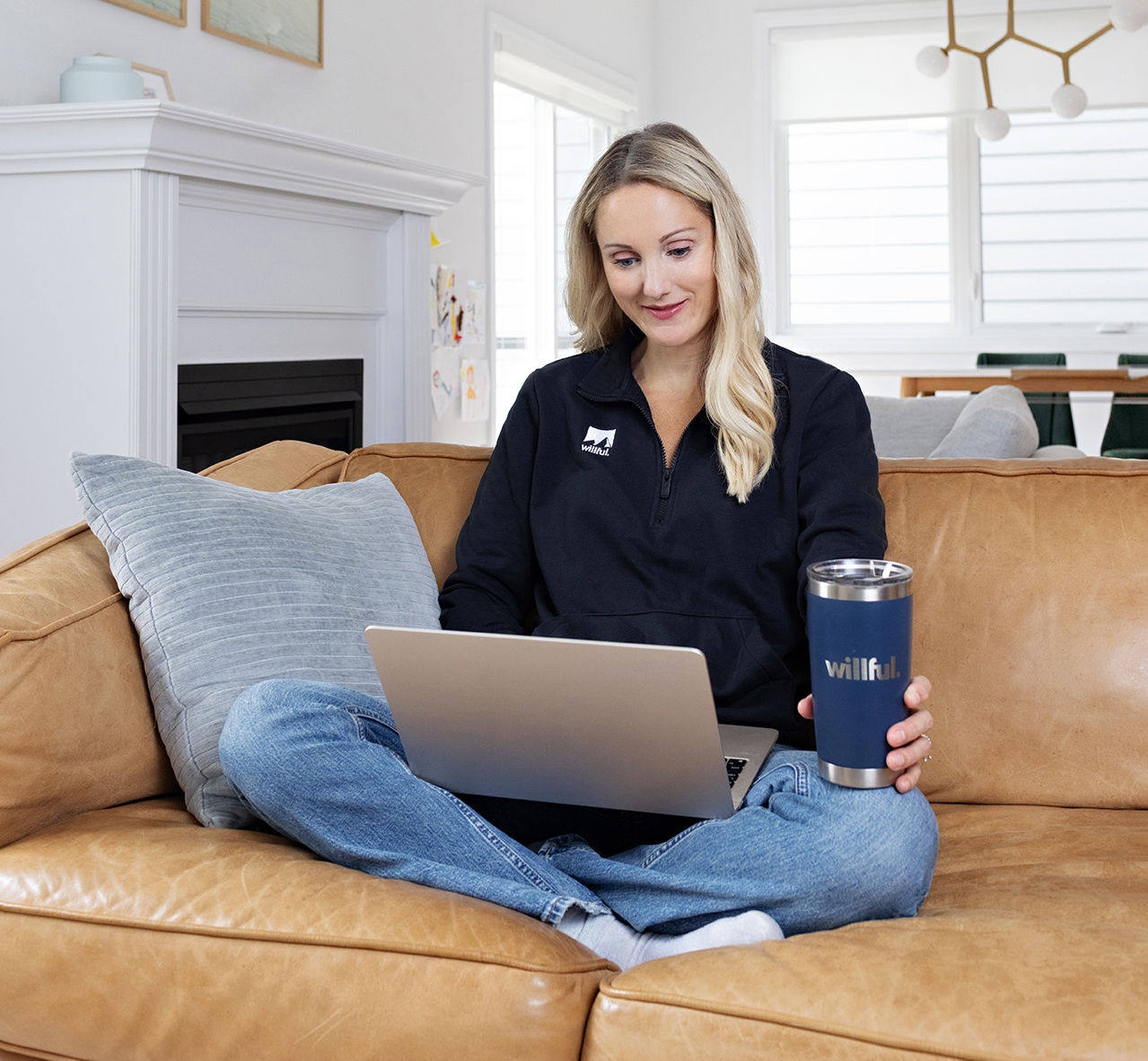
‘I proved to myself that I could be a founder.’
—Erin Bury
In 2019, through her participation in FounderFuel, a Montreal-based mentor-driven accelerator program that helps early-stage technology startups scale and raise seed capital, Bury was advised to make Willful a business-to-business (B2B) company, selling software to lawyers, and to expand into markets outside of Canada. Knowing her goal was to have a direct and positive impact on people, including fellow Canadians, she rejected those suggestions.
“I don’t want to run a B2B business,” she says. “I know what my superpowers are; I love writing, storytelling and creating compelling narratives. I have leaned into this at Willful, especially since the company centres around a topic that makes many people uncomfortable.”
Finding opportunity during the pandemic
A major turning point for Willful was the Covid-19 pandemic. Hundreds of media stories on the rush to create estate plans and wills featured the company, and website traffic grew 600% practically overnight in March 2020. Seniors and boomers were exposed to digital legal tools for the first time, and provinces updated laws to allow digital wills.
“While I welcomed the business growth, I felt tremendous guilt that we were thriving while our peers in hospitality were struggling,” she says.
Not wanting to take their pandemic success for granted, Willful donated $500,000 in free wills to healthcare workers. But the exposure the company received played a significant role in what came next.
Securing investors
In 2021, Bury and Oulds appeared on CBC’s Dragon’s Den. After a successful pitch — the result of countless hours of preparation and practice — they closed a total bridge financing round of $750,000, including participation from “Dragon” Michele Romanow and other strategic investors.
Bury is often asked how it all happened. “I just applied,” she laughs. “People are shocked that it was that simple.”
When they filmed the episode in June 2021, Bury was a few months pregnant with their first child. When it aired that December, their daughter was two weeks old. “As parents, we now share something in common with the majority of our customers,” she says.
That shared perspective extends beyond parenthood. While some people may see their lack of legal background and expertise as a drawback, Bury believes it’s a benefit. Because they aren’t lawyers, they built Willful from a consumer perspective, asking themselves the same questions and navigating the same concerns their customers face.
Redefining success and building a network
Like any founder, Bury has learned a lot about herself during her journey, such as that she has a high risk tolerance. She also now realizes that dreams can change over time. At one point, she thought steady nine-to-five jobs would be her forever path. But now she knows that working for herself and for a purpose, and owning her time, is what fuels her.
“The book The Psychology of Money defines wealth as waking up in the morning and doing what you want with the people you love,” Bury says. “That stuck with me. I don’t want to count down to retirement. I want to enjoy life now.”
Nearly eight years into building Willful, Bury has also absorbed countless practical lessons:
• understand a capitalization (cap) table showing who owns what in a company
• hold onto equity
• hire good corporate lawyers from day one, since fixing cheap legal work costs more later
• find your peer group early.
When Bury is stuck or facing a difficult decision, she knows she can turn to Oulds, her mom and close friends who are also founders. She highly recommends founders find a group of like-minded people, especially if they’re in a rural area.
In September, Bury is expanding her network by embarking on a four-night retreat to Iceland with 50 other ambitious female professionals. She’s looking forward to exploring topics that founders and women don't talk about enough, including the loneliness of entrepreneurship and the identity split between being a founder and a parent.
Of course, no founder’s journey is complete without a few mistakes along the way. That said, Bury would repeat them if she had the chance — even building a subscription model that failed.
“If you’re not taking big swings,” she says, “you’re not going to evolve.”
Footnote
Tangerine Business community stories are featured for informational purposes only and reflect the views, opinions and experiences of the individual. Any business success, results or outcomes described are based on personal experiences and may not be representative of others.
This article does not constitute an endorsement, recommendation or guarantee by Tangerine Bank or any of its affiliates of any kind, including of any individual, business, product or service.

Join a growing business community
Whether you're launching, scaling or figuring it out as you go, this is where entrepreneurs connect, share what's working and help one another move forward.