


















Nairah Awan connects cultures with Studio Purani
As the oldest daughter in a South Asian family, Nairah Awan has felt the weight of expectations throughout her life.
Born in Pakistan, Awan followed a traditional trajectory — completing undergraduate and master’s degrees and securing a corporate job. After working in London, England, she decided to start her next chapter in Toronto, where she’d been an international student.
But in 2025, after a series of coffee chats in pursuit of her next role led to a string of rejections, Awan felt a powerful pull toward something more meaningful and creative. Somewhere during her networking sprint, the recipe for her artisan tableware company Studio Purani began to take shape.
A business inspired by belonging and tradition
Purani, which translates to “old” in Urdu, Pakistan’s national language, is deeply rooted in the experiences that shaped Awan’s young adulthood while studying in Canada.
“As an international student in Canada, I was often far from home, but friends’ families would invite me over for Thanksgiving, Easter or just Sunday dinner,” Awan shares on her company’s website. “Passing food and stories around the table, I felt part of something larger than myself.”
That sense of belonging and tradition extends to Awan’s home, where she and her husband gravitate toward vintage items, filling their space with timeless craftsmanship. With her husband’s encouragement, Awan saw an opportunity to combine her creative talents with her passion for bringing people together. Starting a company focused on beautiful, meaningful and useful pieces felt like a natural next step.
The reality of going solo
As a solo founder, Awan has a lot on her plate. She designs the collections, sources artisan workshops in Pakistan, coordinates shipping, manages social media, showcases her collections at markets, manages the business’s financials and more. Since launching the business more than a year ago, she has learned to embrace that both she and her business are evolving — along with her definition of success.
“I’ve been used to being in traditional jobs, working on projects with defined goals and time frames,” Awan says. “Now, I’m always working on a new set of challenges, and I constantly need to reframe success. And that’s OK.”
Finding confidence in connection with her customers
Like most founders, Awan wrestles with self-doubt. But especially when people suggest she maintains a full-time job while pursuing Purani on the side.
“It makes me think, am I being too naive to believe in this concept?” she says. “But then I pause and reflect on the conversations I’ve had with people who know and love my product. A customer bought a set for her best friend’s 30th birthday to inspire her to start hosting again.”
This kind of connection sits at the heart of Purani. The company’s pieces are designed as much to bring people together as to serve food. For Awan, that human connection fuels her. She engages directly with her Instagram followers — sometimes for hour-long chats — and loves the real-time interactions with customers she meets at markets.

“Instead of trying to perfect imperfections, I embrace them.”
—Nairah Awan, Studio Purani
Learning to set high standards
Still, challenges exist. In Awan’s first holiday season, 80% of products arrived with defects and couldn’t be sold. At that moment, Awan realized she needed to be more intentional about protecting herself and her business.
“I tend to operate with a lot of trust,” she says. “But I know now I need to ask tough questions. I need to get commitments in writing, understand what I’m agreeing to, ask for photos and tracking information, and ensure those I partner with have a sense of accountability. Being small doesn’t mean I need to be easy to work with or be passive. I can still have high standards even as a start-up.”
Awan credits her husband for helping her through various business challenges. “He knows exactly what to say to support me,” she says. “His dad and his brother both have their own businesses, so he knows ups and downs are normal.”
Creating a sense of belonging through design
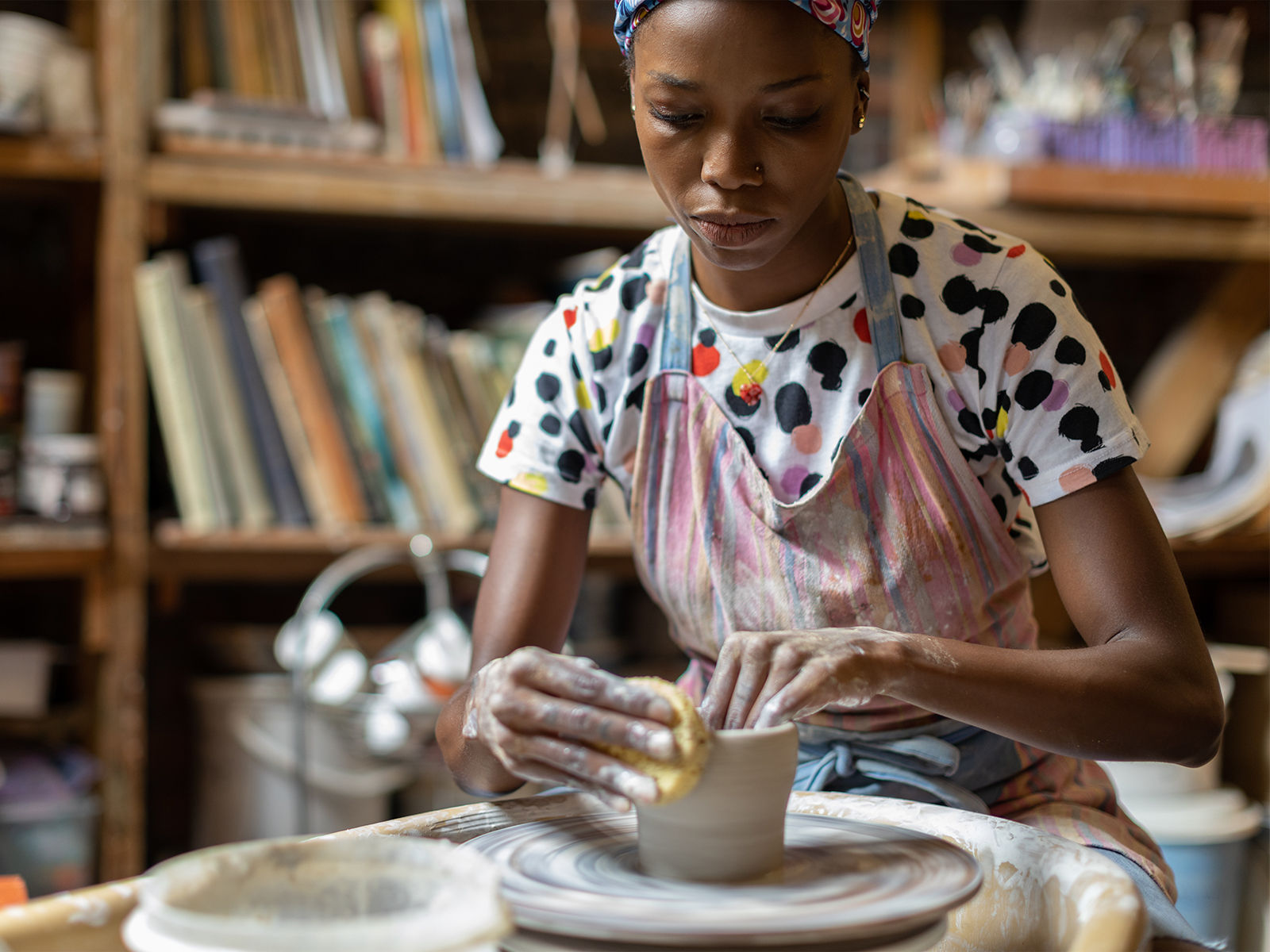
The creative side of Studio Purani is where Awan is in her element. She takes tremendous pride in bringing her visions to life and strives to have every touchpoint of Purani, from products to social media posts, feel like an experience, much like an artist’s catalogue.
Central to that vision is a sense of belonging.
“For me, Studio Purani isn’t just tableware,” Awan writes on her website. “It’s a bridge — between past and present, between cultures, and between the stories we carry and the moments we create. Each brushstroke, hand-carved detail and carefully shaped form is a small act of belonging: to our histories, to each other and to the everyday rituals that make us feel at home.”

Join a growing business community
Whether you're launching, scaling or figuring it out as you go, this is where entrepreneurs connect, share what's working and help one another move forward.
Moving forward and embracing imperfection
Ironically, being a founder can be very isolating. This, Awan explains, is why it’s so important for her to reach out to others for feedback, stay connected to her community and open herself up to unique opportunities, such as meeting supper club hosts and photographers who want to collaborate.
Over a year into her Purani journey, Awan is collecting lessons as deliberately as she’s designing her collections. She’s learned skills and tools once foreign to her. She coded her own website with help from AI, sharpened her SEO skills and recently added Meta ads to her business toolbelt. She forces herself to set aside time to keep upleveling her skill set, uses YouTube as a teacher, and gives herself the grace and time she needs.
By finding her own seat at the founders’ table, Awan is creating space for others to gather, connect and belong. Along the way, she’s learning that belonging doesn’t require perfection — from the people around the table or the pieces on it. If she had the chance to do it over again, she’d still launch before everything was perfect.
“People actually love the quirky characteristics of handcrafted pieces,” Awan says. “Instead of trying to perfect imperfections, I embrace them.”
Download the Modern Entrepreneur Report
Explore the realities, opportunities and challenges shaping modern entrepreneurship in Canada, and discover how the business landscape is evolving.
Footnote
Tangerine Business community stories are featured for informational purposes only and reflect the views, opinions and experiences of the individual. Any business success, results or outcomes described are based on personal experiences and may not be representative of others.
This article does not constitute an endorsement, recommendation or guarantee by Tangerine Bank or any of its affiliates of any kind, including of any individual, business, product or service.