

















Nearly half of Canadians are holding back money they could be investing, survey shows
Canadians aren’t avoiding investing altogether — but many are hesitating.
A new survey, conducted and analyzed by Tangerine, suggests nearly half (48%) are holding back money they could be investing. In some cases, that means tens of thousands of dollars sitting on the sidelines.
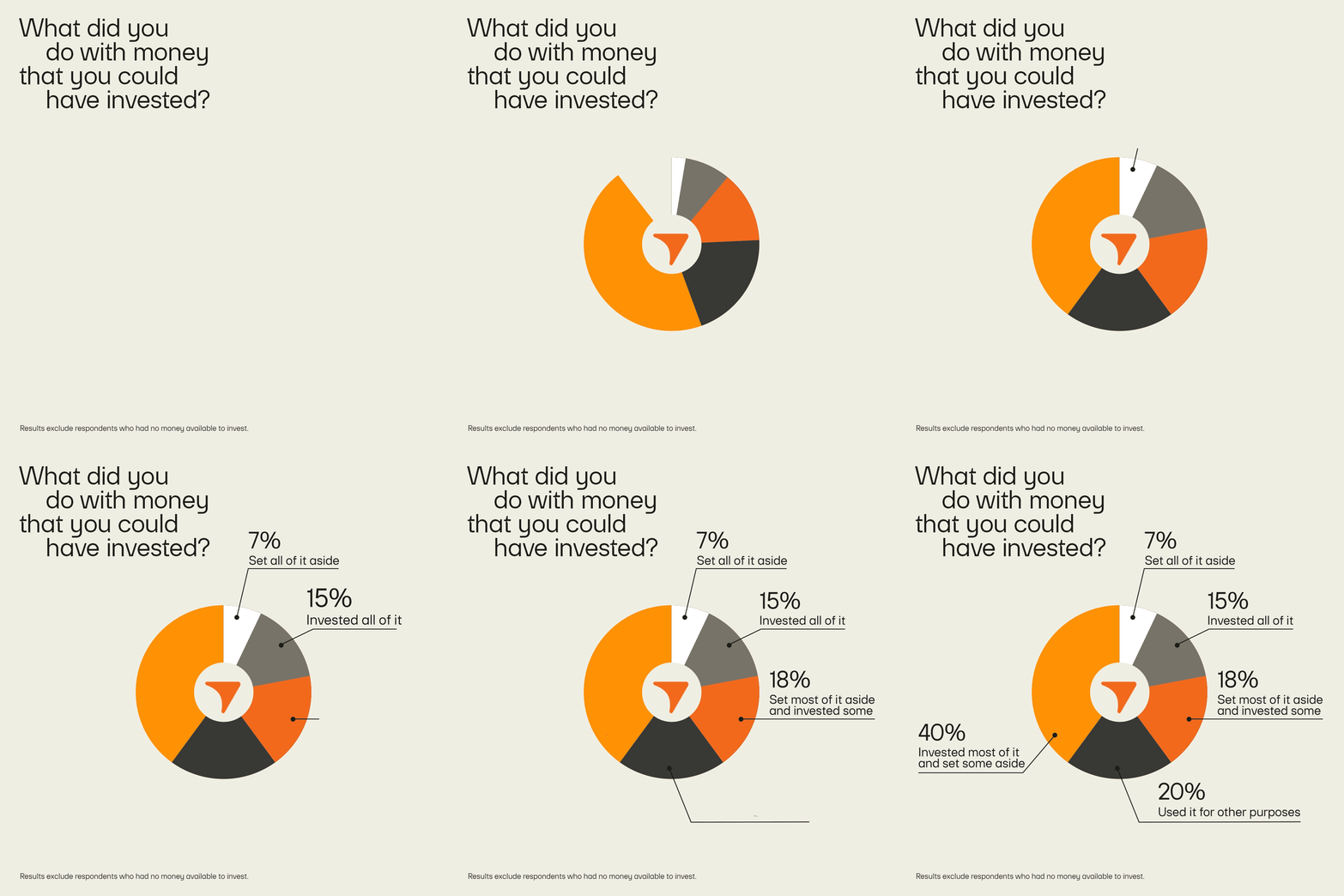
Among Canadians who had money available to invest, two-thirds (65%) set aside at least some of it, with a quarter (25%) setting aside most or all of it. Only 15% say they invested all of it.
So what’s driving the hesitation, and what could help Canadians move forward?
Why Canadians are holding back on investing
For many, the decision isn’t irrational — it’s cautious.
“People can have good reasons to keep their money on the sidelines,” notes Aharon Kagedan, Managing Director, Wealth at Tangerine. “You might be building an emergency fund and want cash available when you need it.”
Cash plays an important role, especially for short-term needs. But money meant for longer-term goals often needs the chance to grow — and that usually means looking beyond chequing or basic savings.
“If you don’t need that immediate liquidity, you might consider investments that give your money more potential to grow over time.”
Investing comes with market risk. But holding cash over longer periods carries its own risk too, as inflation can gradually reduce purchasing power. The right balance depends on your goals, timeline and comfort with risk.
“These are the kind of decisions that an advisor could help you think through,” Kagedan says.
Where is the money going?
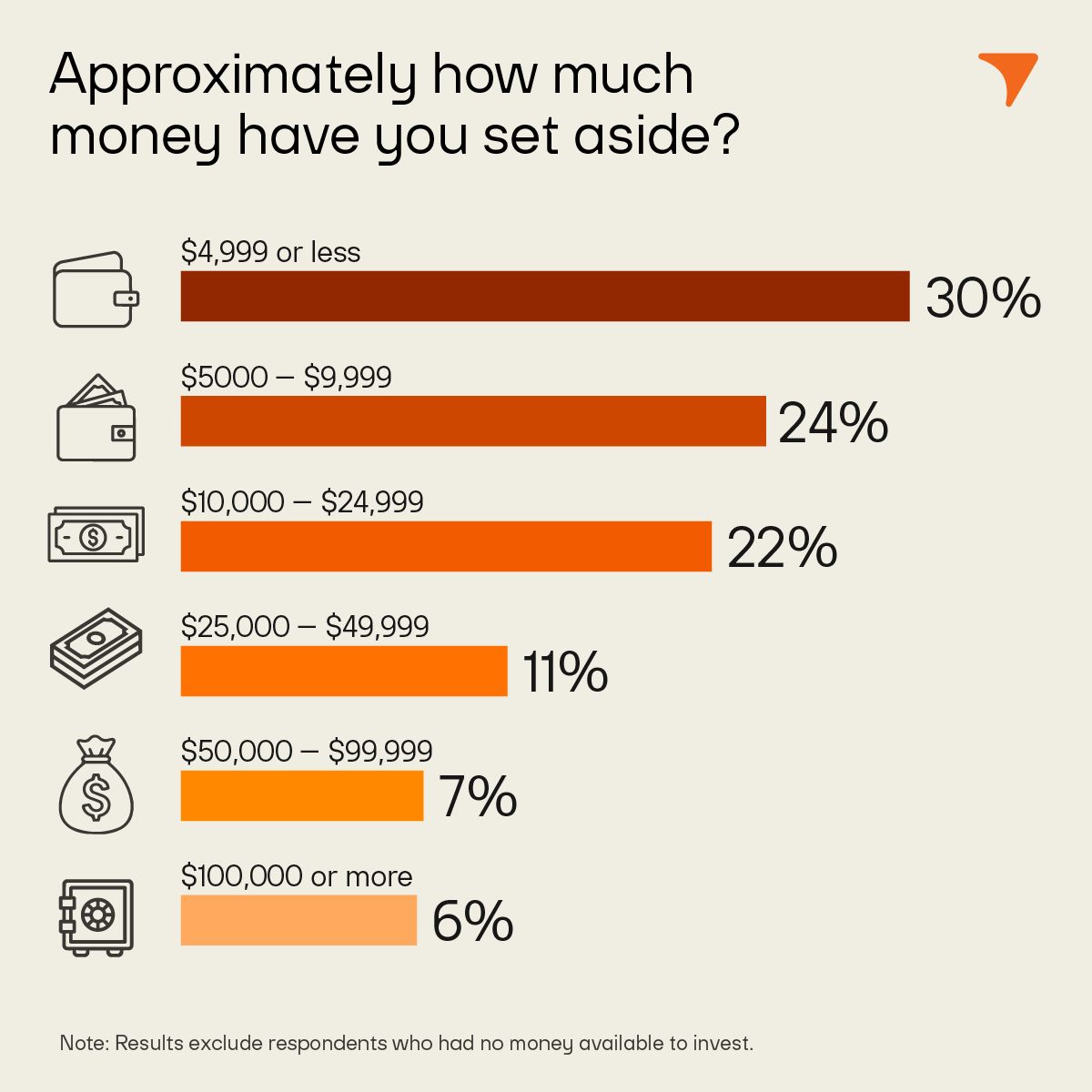
Among those with uninvested funds, the amounts aren’t just loose change. About 24% say they’ve set aside $25,000 or more.
And much of that money is stashed in places that feel safe, but may offer limited long-term growth:
- 36% are keeping investable money in chequing accounts.
- 30% in regular savings.
- 15% in physical cash.
Others are holding money inside TFSAs (35%) and RRSPs (20%), but say it isn’t actually invested.
While a savings account housed in a TFSA or RRSP avoids market fluctuations, it may also miss out on the potential for longer-term growth compared to investments like diversified funds.
“A TFSA or RRSP is only part of the equation,” says Kagedan. “What matters is whether the money inside it is positioned to help you grow over time.”
Liquidity still matters
One of the biggest reasons people hold back? Flexibility.
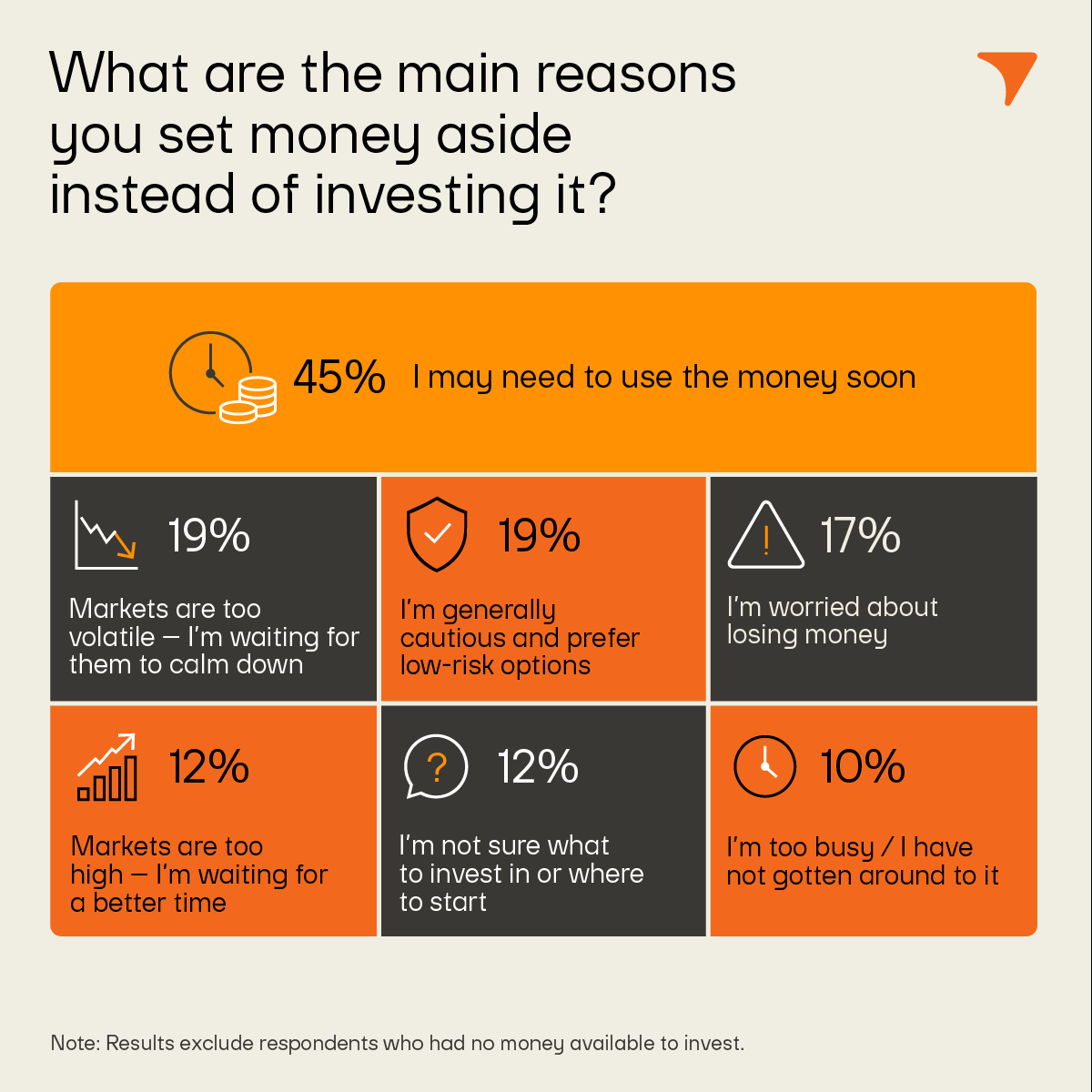
About 45% of Canadians say they may need the money soon, making them reluctant to invest it. That jumps to 59% among those aged 55 to 65.
In a higher-cost environment, access to cash can feel more important than ever. But that trade-off often means money isn’t working as hard over the long term.
How economic uncertainty is affecting Canadian investors
Recent market conditions may be reinforcing hesitation.
The survey reflects behaviour over the past year — a period marked by high valuations, economic uncertainty and global instability.
The survey shows:
- 19% cite market volatility as a reason for holding back.
- 17% worry about losing money.
- 12% believe markets are too high.
“The most common concern I hear from clients is that markets are too high,” says Aaron Ayers, a Certified Financial Planner® and Tangerine Advisor. “People wait for a pullback — but that waiting can stretch into months or years.”
During that time, markets may continue to grow, making the decision to wait potentially costly.
Ayers suggests a different approach. Start small and stay consistent.
“Regular contributions can help take some of the uncertainty out of the equation,” he says.
Investing confidence and hesitation varies by age and province
Investing hesitation — and confidence — tends to vary by age.
Among Canadians 18 to 24:
- 25% say they’re not sure what to invest in or where to start (vs. the Canadian average of 12%).
Among those aged 55 to 65:
- 19% say they have no confidence in their investing decisions (vs. 6% of 18-to-24-year-olds).
Among Canadians overall:
- half (51%) say they feel somewhat or very confident in making investing decisions.
The survey also found significant regional differences.
In Ontario, more respondents say they’re worried about losing money (23%). British Columbians appear less worried by comparison (9%) and are more likely to have already invested most or all of their available funds (66% vs. 55% overall). Meanwhile, those in Atlantic Canada are a lot more risk averse with their investments (33% vs. 20% overall).
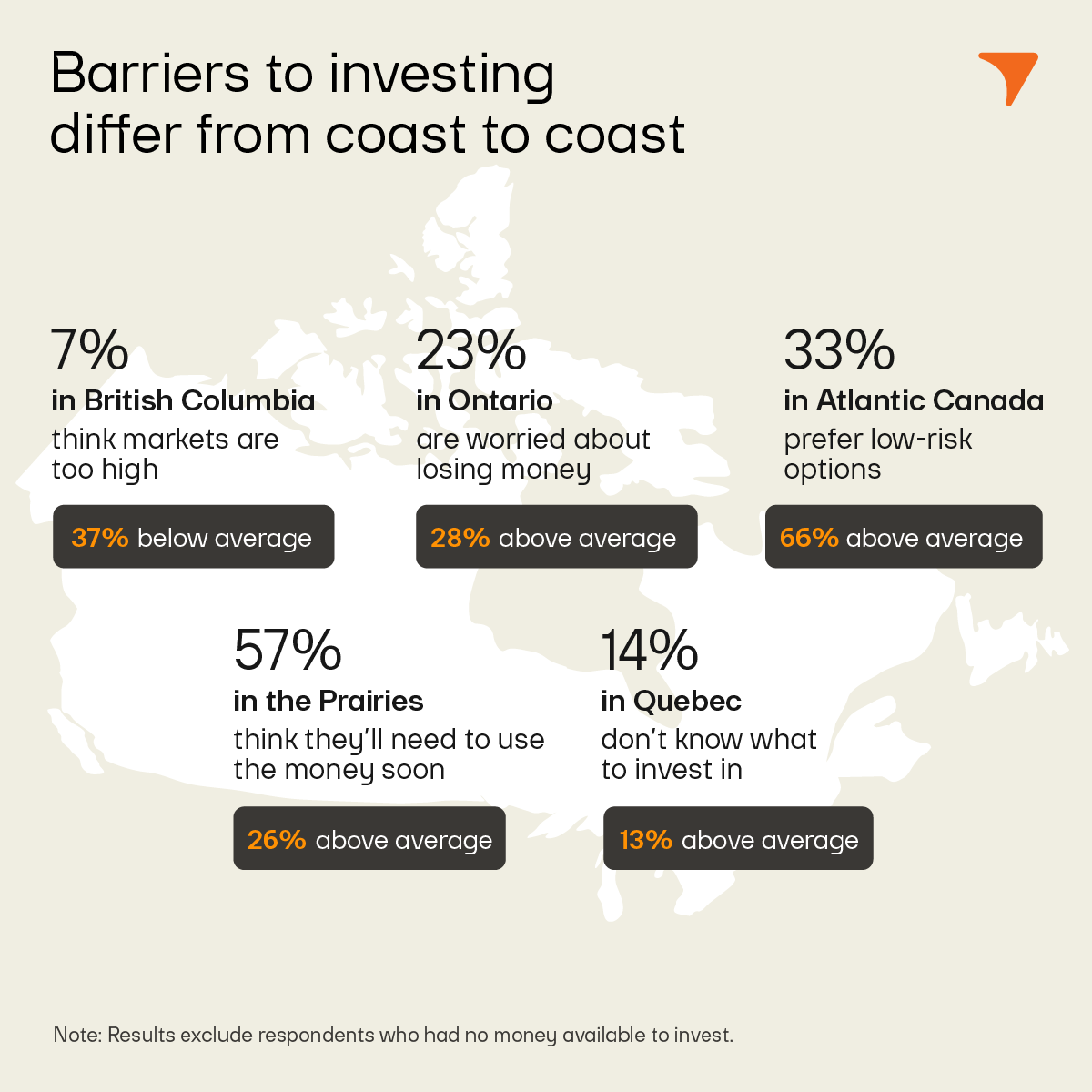
The takeaway? There is no single Canadian investor mindset. Younger investors may need clearer starting points, older investors may need more confidence, while worry — and action — can vary widely by province.
What would encourage Canadians to invest?
Canadians aren’t opposed to investing. They just need the right conditions.
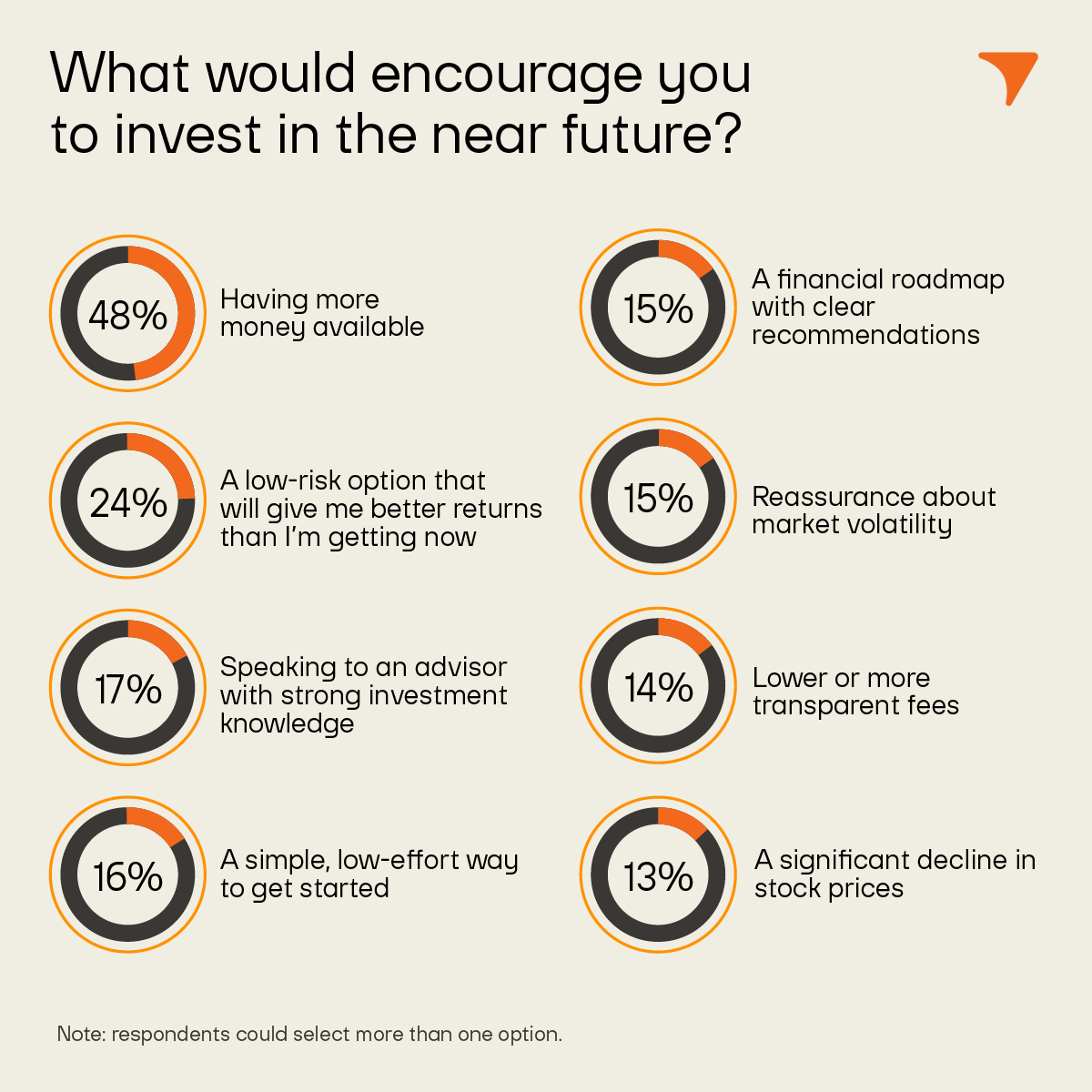
Top motivators include:
- Having more money available (48%).
- Lower-risk option with better returns (24%).
- Access to knowledgeable advice (17%).
- Simpler, low-effort ways to get started (16%).
In other words, they’re seeking clarity on what to invest in, how much risk makes sense, and how to start in a way that feels manageable. That’s where a licensed advisor can make a meaningful difference.
Younger Canadians in particular want a financial roadmap with clear recommendations (26% among 18-to-24-year-olds) — not just goals, but a ladder to help them get there.
From waiting to building momentum
Many Canadians are already saving and planning, while stopping just short of investing for the future.
But the longer money sits on the sidelines, the harder it may have to work to catch up.
“I like to remind clients that investing doesn’t have to be a single high-stakes decision,” says Ayers. “Waiting for the perfect moment can hold people back.”
For many people, taking the next step may start with a conversation.
An advisor can help turn a broad goal like “I should invest” into reality — a plan shaped around your timeline, comfort with risk and how much you can realistically set aside.
Because in many cases, moving forward isn’t about perfect timing. It’s about taking the next step.

Get up to a 3% bonus on your investments
Earn more for your investment journey. Start with 2% when you invest, then refer a friend to reach 3%.*
[Methodology: This survey was conducted by Tangerine on behalf of Tangerine Investment Funds Limited using an online panel from March 9 to 11, 2026. The sample included 768 Canadians aged 18 to 65 who either make financial decisions on their own or share decision‑making with someone else in their household.]
Investing involves risk, including possible loss of principal. Returns are not guaranteed and will vary based on market conditions. Individuals should consider their financial goals, time horizon and risk tolerance before investing.
Commissions, trailing commissions, management fees and expenses may be associated with mutual fund investments. Please read the prospectus before investing. Mutual funds are not guaranteed; their values change frequently, and past performance may not be repeated.
Diversification does not guarantee a profit or eliminate the risk of loss.