




















How to read a paystub
When most of us glance at our pay stub, our eyes head straight for the net pay — the number that tells us exactly how much money we have left over to spend. However, a pay stub is filled with important information beyond that bottom line, such as deductions, contributions and benefits that affect your current and long-term financial health.
By taking a closer look, you can spot errors, track where your money is going and make smarter choices for budgeting and saving. Even a quick review gives insight into your spending power, employer contributions and opportunities to grow your savings.
A pay stub isn't just a record of what you earn — it's a roadmap to understanding and managing your money.
Why you should understand your pay stub
Beyond being a receipt for all your hard work, your pay stub details how your gross income is converted into your net pay, including any deductions and contributions. Understanding what each line shows helps confirm you're being paid accurately. It also allows you to track tax withholding, retirement contributions and other voluntary or mandatory deductions.
Payroll systems are complex, and even the best employers can make mistakes. Reviewing your pay stub ensures you know exactly where your money is going. It can also help you spot trends in your earnings, deductions and benefits. For example, if a voluntary contribution or insurance premium unexpectedly increases, you'll notice it early and can ask your employer to adjust accordingly. Over time, this awareness makes budgeting, planning for retirement and achieving financial goals much easier.
Breaking down the pay stub
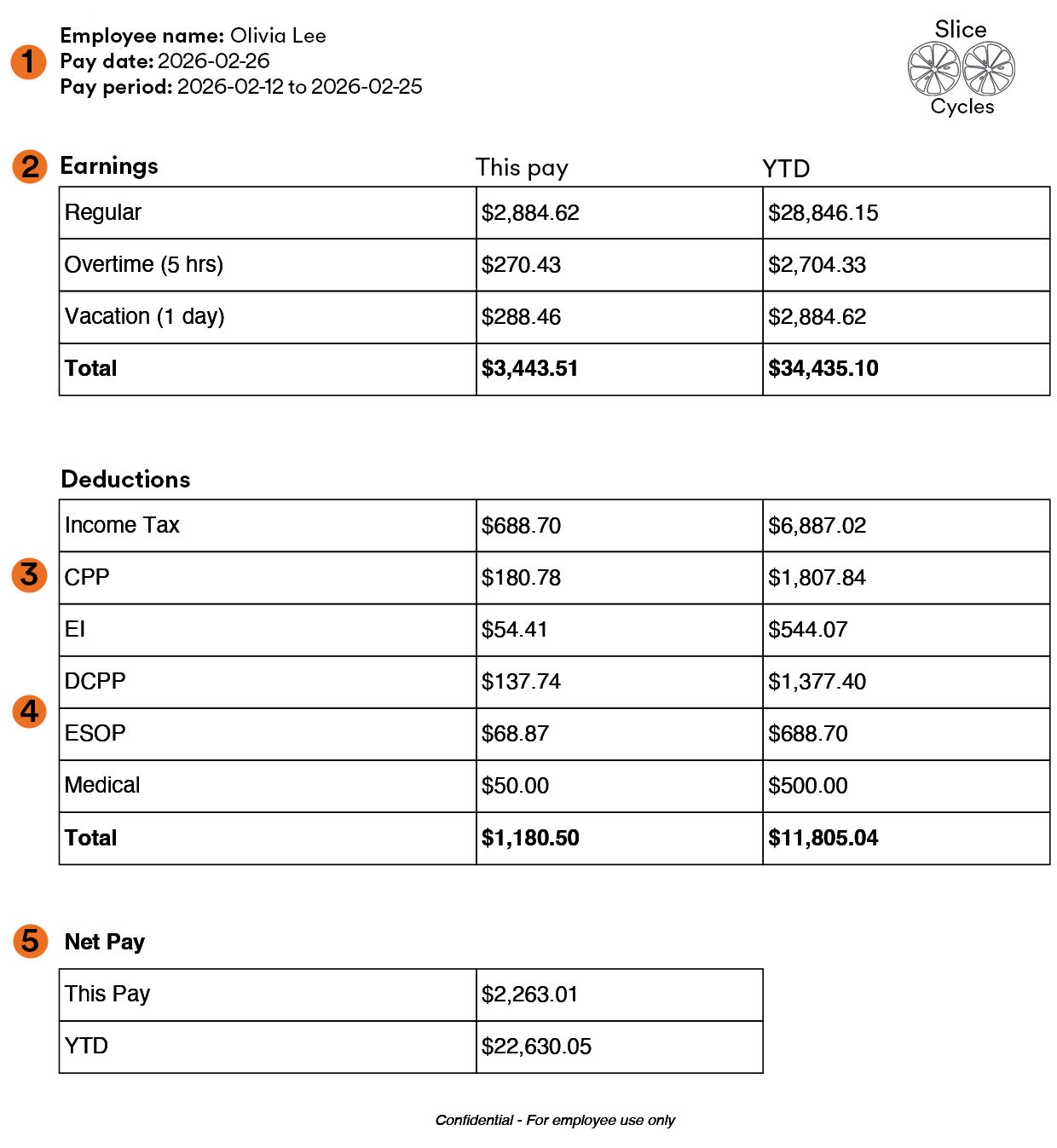
A typical pay stub includes multiple sections that can seem confusing at first glance. To illustrate, we'll use a fictional pay stub for a fictional employee named Olivia Lee.
1. Employee information and pay period
This section usually lists your name, employee ID and pay period. For example, Olivia's pay stub shows:
- Employee name: Olivia Lee
- Pay period: June 12 - 25, 2025
- Pay date: June 26, 2025
This information is important for tracking hours worked, vacation balances and ensuring your personal details are correct. Mistakes in this section could mean misapplied overtime, vacation pay errors or problems with payroll deposits.
2. Gross pay
Gross pay (or earnings) is the total amount you earn before any deductions. Olivia's pay stub shows:
- Regular earnings: $2,884.62
- Overtime (5 hours): $270.43
- Vacation (1 day): $288.46
- Total gross pay: $3,443.51
Gross pay includes salary, hourly wages, overtime and any paid time off. It can also include variable income, such as tips and commissions.
Comparing your gross income with your employment agreement ensures you're being compensated correctly. It also helps you anticipate how deductions will affect your net pay.
3. Mandatory deductions
Mandatory deductions are required by law and fund government programs like the Canada Pension Plan (CPP), Employment Insurance (EI) and other social services. Other deductions, such as union dues, may also appear here. These deductions might provide benefits for you in the future. Tracking them helps with tax planning and understanding your eventual entitlements.
For example, Olivia's deductions include:
- Income tax: $688.70
- Canada Pension Plan (CPP): $180.78
- Employment Insurance (EI): $54.41
Understanding these deductions ensures you know exactly how much of your income contributes to social programs and how this affects your take-home pay.
4. Voluntary deductions
Voluntary deductions are amounts you choose to contribute to additional benefits or savings plans. Examples from Olivia's pay stub include:
- DCPP (Defined Contribution Pension Plan): $137.74
This is money Olivia contributes to her retirement savings in an employer-sponsored registered pension plan. Her employer also matches part of this amount. The total grows over time and will be available to her when she retires.
- ESOP (Employee Stock Ownership Plan): $68.87
This deduction goes toward buying shares in her employer's company. An employer contribution may also top these up. It gives her an ownership stake, which can increase in value if the company performs well.
- Medical benefits: $50.00
This amount helps pay for extended health coverage beyond what provincial government healthcare provides, such as dental, vision or prescription drug plans.
These contributions may vary by employer. Understanding the details ensures you know what you've opted into and how it affects your net pay. Voluntary deductions like these often represent investments in your future, such as retirement savings, stock ownership, or enhanced health coverage.
5. Net pay
Net pay is the final amount deposited into your bank account after all deductions. Olivia's pay stub shows:
- This pay period: $2,263.01
- Year-to-date (YTD): $22,630.05
Net pay is the total you have to work with for budgeting, while the other line items provide insight into your total compensation and long-term benefits. You can understand how each contribution and deduction impacts your take-home earnings by comparing net pay with your gross pay and deductions.
Take note of employer contributions
Employers often make contributions on your behalf to retirement plans, health coverage or other benefits. While these contributions don't increase your take-home pay, and may not appear on your regular statement, they do increase your total compensation and contribute to long-term financial security.
Reviewing employer contributions helps you see the full value of your employment package. For example, an employer's contribution to your pension plan may match your own contributions up to a specific limit. Knowing this allows you to maximize benefits and make informed decisions about additional voluntary contributions.
Why reviewing your pay stub regularly is important
Checking your pay stub regularly helps you spot errors, track deductions and make informed decisions about budgeting and planning for the future. It also reinforces financial awareness. Knowing where your money goes is just as important as what you earn.
Regular reviews provide a clearer picture of your finances. You may notice trends, such as small recurring deductions that add up over time, or increased contributions to benefits that could be adjusted. This awareness allows you to take control of your money, plan for unexpected expenses and set realistic financial goals.
How understanding your pay stub helps with financial planning
Understanding your deductions, contributions and employer benefits can help you:
- Budget accurately: Knowing your net pay allows you to plan for monthly expenses without surprises.
- Plan for retirement: Tracking contributions to pension or RSP plans helps ensure you're saving enough for the future.
- Maximize benefits: Understanding employer contributions, stock plans, or health benefits allows you to make the most of your compensation package.
- Build an emergency fund: By tracking pay and deductions, you can identify how much to set aside for unexpected expenses.
Using this knowledge lets you make smarter financial choices and strengthen your savings, whether in Registered Retirement Savings Plans (RRSPs or RSPs at Tangerine), Tax-Free Savings Accounts (TFSAs), or emergency funds, helping you build a secure financial future.
Putting your pay stub to work
Think of your pay stub as a snapshot of your earnings, deductions and benefits. It's more than a piece of paper to be filed away; it's a tool to help you manage your money. Regularly reviewing your pay stub helps you:
- Ensure accuracy: Spot errors before they affect your pay or benefits.
- Track savings: See how voluntary contributions to pensions, stock plans, or health benefits impact your long-term wealth.
- Understand total compensation: Recognize the value of employer contributions and benefits in addition to your take-home pay.
- Set up automatic contributions to your savings or investments: Consider "paying yourself first" whenever your pay is deposited in your account, so that you save or invest before you have the chance to spend.
- Take control of your finances: Gain confidence in your ability to plan for short-term and long-term financial goals.
The more you understand your income, the more control you have over your financial future. Every deduction, contribution and benefit has a purpose, and you're actively improving your financial well-being by reviewing your pay stub.